
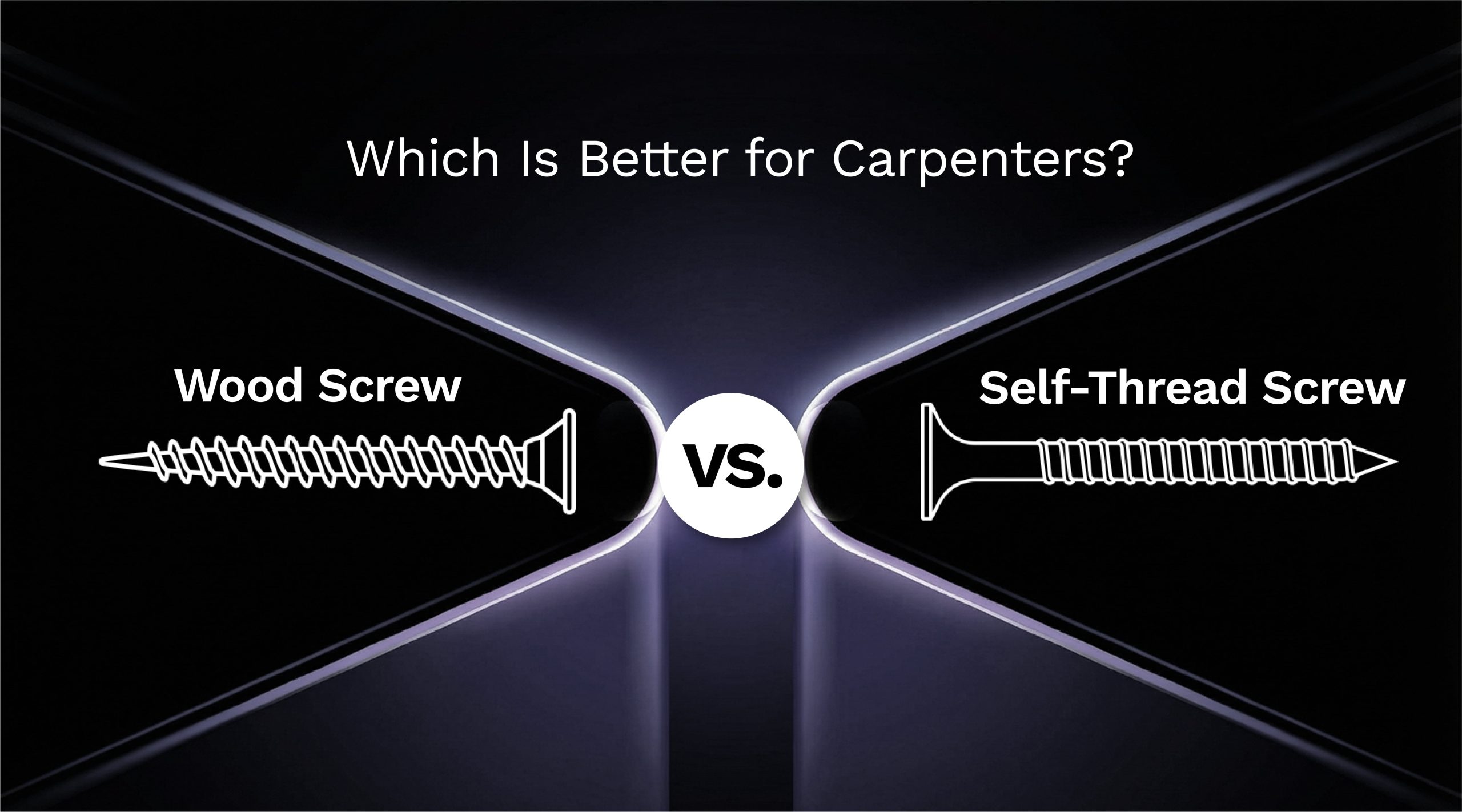
Wood screw vs. self-thread screw is a question most carpenters don’t really ask when work is going smoothly. It usually comes up later. Usually when a joint loosens, a panel cracks slightly at the edge or something that looked fine during installation doesn’t feel right a few weeks down the line.
In the workshop, a screw is often treated as a simple thing. You pick one from the box, drive it in and move on. Time matters. Flow matters. Thinking too much about fasteners feels unnecessary when there’s real work waiting.
But wood has its own way of reacting. Softwood behaves differently from hardwood. Fresh boards behave differently from seasoned ones. And the way a screw enters the wood quietly decides how strong that joint will be later.
With this blog, we’re not trying to declare a winner or label one screw as ‘best’. The idea here is to slow the decision down just enough to understand what each screw is designed to do. And why choosing the right screw often saves more effort than it costs. If you’ve ever wondered why two similar-looking screws behave so differently in wood, this blog will feel familiar.
Walk into any hardware shop and you’ll see it immediately. Rows of screws that look almost identical, but are called very different things such as wood screw, self-thread screw, self-tapping and even self-drilling screws. When you ask for one, the dealer might hand you another saying, “Same thing, this also works.” And many times, it does. At least at first.
Most carpenters don’t learn screws from manuals. They learn from experience. From what worked last time. From what saved time on a busy day. From what didn’t fail immediately. So when a faster option shows up, it’s tempting to adopt it everywhere.
The only problem with this is that wood doesn’t react instantly. It responds slowly. Under the load, with movement and with changing temperature and weather conditions of every season. A screw that holds today may behave very differently months later. The mistake doesn’t look like a mistake until much later.
Add to this the loose way terms are used on site and at counters and it’s easy to see why wood screw vs. self-thread screw feels like an unnecessary debate, until something goes wrong. Thus understanding why this question keeps returning in carpentry circles and why it’s worth answering properly once becomes very crucial.
Most decisions on site aren’t theoretical. They’re situational. You look at the wood in front of you. You look at the size of the job. You look at how much time you have. If the work is repetitive, speed starts to matter. Driving hundreds of screws into similar boards changes how patient you feel about pilot holes and careful alignment. A faster screw feels like relief.
If it’s finish work, control matters more. You want the joint to sit clean. You want the edge to stay intact. You don’t want to explain later why a board split or why a screw head sank too deep. Wood type plays its role here. Softwood is forgiving. It accepts most screws without complaint. Hardwood resists, pushes back and exposes mistakes quickly.
Then there’s permanence. Is this joint meant to stay for years? Or might it be adjusted or corrected later? Carpenters don’t consciously list these questions. They feel them. Over years of work, the hand develops its own judgement.
This is why debates around wood screw vs. self-thread screw don’t get settled easily. Both have their place. Both can feel right depending on the situation. Problems begin when one type is used everywhere, without thinking about why it worked in one job and failed in another.
A wood screw has to be dependable. Its thread is shaped to bite gradually into wood fibres, allowing the material to compress and grip instead of cracking under pressure. This controlled engagement enhances the holding strength of wood screws. That’s why when you are drilling wood screws in hardwood, you do need a pilot hole.
It guides the screw, reduces stress and lets the threads work evenly. When driven correctly, a wood screw pulls two pieces together with control. You feel it tighten. You sense when to stop. The screw seats itself without forcing the wood to give up more than it should.
This is why many carpenters still reach for wood screws during finish work cabinets, door frames, furniture joints, places where alignment, surface finish and long-term holding matter more than speed.
A good wood screw also behaves predictably when removed. Threads don’t chew up the hole unnecessarily. That’s where working with a reliable wood screw manufacturer quietly makes a difference not in claims, but in how the screw behaves every single time.
For carpentry work where a clean, flush finish matters, especially in furniture and cabinetry, it’s also useful to understand how countersunk designs behave in wood, which we’ve covered separately in our guide on CSK Wood Screw and its uses.
A self-thread screw is built for speed. Its sharper, more aggressive thread is meant to cut its own path as it goes in. In softer materials, this saves time. There’s no separate step, no pilot hole, no pause between pieces. For repetitive tasks, this feels efficient. You line up the board, drive the screw and move on. On busy sites, that difference adds up quickly.
But the same aggressiveness changes how the wood reacts. Instead of easing into the fibres, the screw forces its way in. In softwood, this usually works without complaint. In hardwood, resistance increases and stress builds around the entry point.
The debate around Wood Screw vs. Self-Thread Screw is about their true usage. A wood screw prioritises grip and control. A self-thread screw prioritises speed and convenience.
For operations that need clean joints, intact edges or hardwood is involved, wood screws tend to behave more predictably. When the job involves repetitive fixing, softer wood or temporary structures, self-thread screws often feel easier to work with.
While both can hold wood together, each of them is designed to serve their unique purpose the job actually demands.
Instead of fixed rules, think in situations.
This way of thinking mirrors how experienced carpenters already work—by feel, not formulas.
For woodwork self-drilling screws are rarely necessary. Using them in wood doesn’t add much benefit and often reduces control. That’s why most carpenters instinctively avoid them for furniture and joinery, even if the names sound similar.
Most mistakes don’t come from lack of skill. They come from familiarity. Using the same screw everywhere because it worked once. Skipping pilot holes to save time even when the wood resists. Assuming harder screws always mean stronger joints.
Another common issue is over-driving. Faster screws encourage speed and speed reduces feedback. The screw goes in, but the wood quietly suffers. These mistakes don’t look serious at first. They only become visible when something loosens, cracks or needs adjustment later. Awareness fixes most of them.
Beyond type, consistency plays a quiet role. When screws vary in thread sharpness, hardness or finish, results vary too. One joint holds perfectly. Another behaves strangely.
This is why experienced carpenters stick to sources they trust, not because of branding, but because predictability matters. When you know how a screw will behave, decisions become easier. Good screws don’t draw attention to themselves. They simply behave the way you expect them to.
Choosing between screws is really about recognising what the job is asking for. Both wood screws and self-thread screws exist because carpentry isn’t one-dimensional. Different woods, different joints, different pressures. When you slow the decision down just a little, the choice usually becomes obvious. And when the right screw is used in the right place, it rarely needs to be discussed again, which in carpentry, is often a sign that things were done right.
FAQs:
Q1: Can self-thread screws replace wood screws in all carpentry work?
No. Self-thread screws are useful for operations where speed is important. Whereas, wood screws offer better control and holding strength in finish work.
Q2: Do I always need a pilot hole when using wood screws?
Consider pilot holes as preparation rather than inconvinience. They reduce stress during installation and help the screw seat properly.
Q3: Why do joints sometimes loosen even when the screw looked fine during installation?
Wood reacts over time and changes in moisture, load and movement can affect how a screw holds. A fastener that goes in easily may not have formed a stable grip, especially if the wood was forced rather than prepared.


