
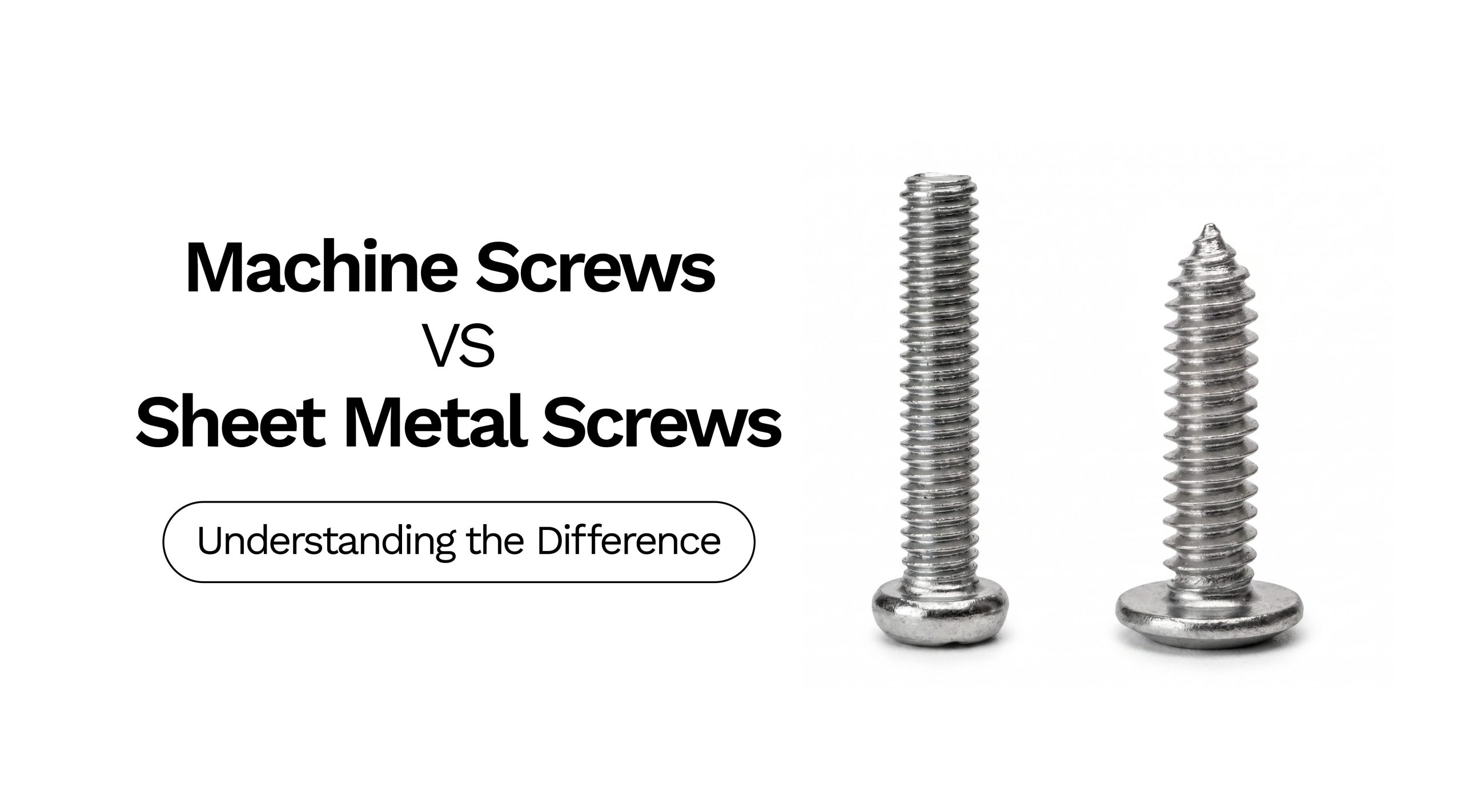
Many craftsmen and carpenters use machine screws and sheet metal screws as if there is no difference. Most of the time, they are okay with the shopkeeper handing over either one without asking for the specific screw they really needed. They use machine screws and sheet metal screws as if there is no difference, but understanding machine screws vs sheet metal screws isn’t really a semantic argument. It decides how firm the joint holds.
Most hardware shops stock both screws in the same drawer, sorted by length. Drive type barely factors into it. When a master carpenter asks for ‘1 inch screws’ without mentioning any details and a helper handover whichever one is closer to hand. It is not about being careless, but it may happen as screws can look very much identical at times. And the actual difference only shows up once you try to drive one into the wrong material.
A machine screw has no ability to cut its own path into material. Drive one straight into wood or sheet metal and it just spins, because the thread is meant to engage a matching thread that’s already there, either tapped into a pre-drilled hole or waiting on the far side as a nut. That’s the whole mechanism.
LP Screw’s Machine Screw range comes in two thread systems, MM for metric holes and BSW for imperial ones, and the choice between them usually comes down to whatever the rest of the fixture already uses. On furniture, this shows up in pull handles and wardrobe cabinet handles, where the screw threads into a nut sitting inside the cavity. In electronics assembly and engine work, the same mechanism holds panels to a tapped chassis.
If you are working on wooden wardrobes and cabinets, rust is a bigger enemy than the thread type. Read our guide on why SS screws beat mild steel for monsoon furniture maintenance.
LP Screw’s SS CSK Phillips Machine Screws in MM thread run from 2mm to 10mm diameter, in lengths from 6mm to 70mm, packed 200 to a pouch for the shorter sizes and 100 for anything past 25mm. The BSW thread variant uses a slotted drive and covers 1/8 inch to 3/8 inch diameter across a length range of 1/4 inch to 3 inches. Both need a hole or nut waiting on the other side. Neither one cuts its own thread into a blind steel hole the way a self-tapper does. Picking between MM and BSW usually isn’t a performance decision. It depends on the equipment. Metric equipment takes the MM range, imperial equipment takes BSW.
Sheet metal work usually calls for a self-drilling screw over a machine screw. The reason comes down to access, since a self-drilling screw like LP Screw’s SDS range cuts its own hole and its own thread in a single pass, which matters when you’re fixing a bracket to a steel channel with no way to reach the back side for a nut. That’s the whole advantage. LP’s SDS drills through 4mm to 4.5mm thick metal, roughly double what a typical imported alternative manages. The CR6+ coating carries a verified 96-hour salt spray rating. On a job where both sides of the joint are open to you, a machine screw and nut combination clamps just as securely and often costs less per piece.
A machine screw earns its place wherever the assembly already has a tapped hole waiting. Cabinet handles, electronic housings, engine covers, all fall into that category. Bring the same screw to a closed steel channel with nothing on the other side and it has nothing to bite into. If you can get a spanner or a bare hand behind the joint, a machine screw works fine. If you can’t, a self-drilling screw is built for exactly that gap.
| Factor | Machine Screw | Self-Drilling Screw (SDS) |
| Hole preparation | Needs a pre-tapped hole or a nut | Cuts its own hole and thread |
| Access needed | Both sides of the joint | One side only |
| Drill capacity | Depends on the tapped hole, no rating of its own | 4mm to 4.5mm thick metal |
| Material | SS or MS | Carbon Steel |
| Best suited for | Cabinet handles, electronic housings, engine covers | Steel channels, brackets with no back access |
Ultimately, making the right choice between machine screws vs sheet metal screws starts by checking whether you can reach both sides of the joint. If there’s a cavity behind the panel, a machine screw with a matching nut is the simpler, cheaper choice. That’s the easy case. Sealed steel with nothing behind it rules out the machine screw entirely, and only a self-drilling screw will actually grip. Thread standard matters too.
Mixing MM and BSW hardware on the same fixture creates more site headaches than it saves in cost. LP Screw, as a machine screws manufacturer in India working across both thread systems, keeps enough of each pouch size in stock, so switching midway through a job doesn’t mean waiting on a new supplier.
The hardware shop drawer doesn’t know which screw is in your hand, but the joint will. A machine screw with nothing to thread into just sits there loose, and a self-drilling screw used where a simple nut and bolt would do costs more than it needed to.
Before reaching into that drawer, check what’s on the other side of your material. If there’s a nut or a tapped hole waiting, a machine screw does the job at lower cost. If the far side is sealed steel with nothing open behind it, the self-drilling screw is the one that actually earns its price on that job. That comes first.
1. Can I use a machine screw on sheet metal?
Only if you can get behind it. A machine screw needs a nut or a pre-tapped hole on the far side, so it works on sheet metal you can access from both faces, not on a closed steel channel.
2. What’s the difference between self-tapping and machine screws?
A self-tapping or self-drilling screw cuts its own hole and thread in one pass. A machine screw needs that thread already there, either tapped into the material or waiting as a nut on the other side.
3. Do stainless steel machine screws need a pilot hole?
Yes, in most cases. The MM and BSW ranges thread into an existing tapped hole or nut. They don’t cut their own path, so that hole has to exist first.


